
Louisiana OMV Permit Practice Test 26
- Questions40
- Correct to pass32
- Passing score80%
- Minimum age15 years
-
1. What is the Louisiana prelicensing training course for a first time applicant aged 18 or older?
Show answer
Answer B: Six hours of classroom instruction and eight hours of actual driving instruction
An applicant of 18 or older who has never been licensed may take a prelicensing course of six classroom hours and eight hours of driving instruction, which includes the skills test.
-
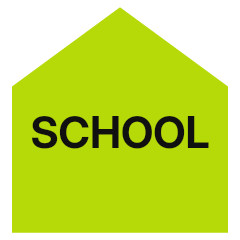
2. A crossing guard steps into the roadway ahead of this sign with one hand raised. What must the driver do?
Show answer
Answer B: Stop and stay stopped until the guard waves traffic on
An adult guard is controlling traffic at that crossing, so the instruction given by that person governs and the driver waits to be released.
-
3. What are the minimum liability limits a Louisiana motor vehicle liability policy must carry?
Show answer
Answer C: 15,000 dollars per person, 30,000 per accident and 25,000 property damage
Louisiana requires 15,000 dollars for bodily injury to or death of one person, 30,000 dollars where two or more are hurt in one accident, and 25,000 dollars for damage to the property of others.
-
4. A large truck is passing you on a two-lane road. What is the safest thing to do?
Show answer
Answer C: Keep right in your lane and ease off the gas a little
Staying in your own lane and easing off shortens the pass without forcing you onto a soft shoulder or into the truck's path.
-
5. You have turned onto a ramp at night and your headlights pick out large white arrows painted on the pavement pointing straight back at you. What do they mean?
Show answer
Answer C: You are traveling against the flow and must turn back
Wrong-way arrows are laid so that a driver going the correct way never sees them head on, so an arrow pointing at you means you are on the ramp backwards.
-
6. Why is repeatedly changing lanes to work through heavy traffic a poor idea?
Show answer
Answer A: It raises the crash risk and saves almost no time
Each lane change adds a conflict with another vehicle, and in congestion the lanes move at similar average speeds, so the gain is negligible.
-
7. You are already inside an intersection when you realize you should be in the lane beside you. What should you do?
Show answer
Answer C: Stay in your lane through the intersection and change lanes afterwards
Drivers in an intersection are watching for cross traffic and turning vehicles, so an unexpected sideways move there is easily missed.
-
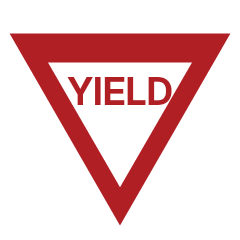
8. A driver reaches this sign and the intersecting roadway is completely clear. What is required?
Show answer
Answer D: Slowing to a speed that allows stopping, then going on without stopping if the way stays clear
This control asks the driver to slow down and be ready to stop, and a full stop becomes necessary only when traffic or pedestrians would otherwise be interfered with.
-
9. A yellow lamp flashes above a warning sign at a sharp curve. What does it ask of a driver?
Show answer
Answer D: Slow down and pass the point with extra care
A warning beacon draws attention to the sign it is mounted with, and the message of the sign is what the driver must act on.
-
10. What is the purpose of carrying a first aid kit in your vehicle?
Show answer
Answer D: It lets you treat cuts and bleeding while the help is on its way
A kit is for simple first aid such as controlling bleeding until trained help arrives, not a substitute for calling for that help.
-
11. Your light turns green, but a vehicle is still in the middle of the intersection. What should you do?
Show answer
Answer D: Wait until the intersection is clear before you move ahead
A green light means go only when the way is clear. Drivers already inside the intersection must be allowed to finish crossing.
-
12. Which color scheme is standard for the drums and barricades that channel traffic through a work zone?
Show answer
Answer C: Alternating orange and white retroreflective stripes
Drums and barricades carry alternating orange and white retroreflective stripes, and the traffic cones used in the same zones are predominantly orange.
-
13. A ball rolls into the street from between parked cars ahead of you. What should you expect and do?
Show answer
Answer A: Expect a child to follow it and be ready to stop
A ball is usually followed by a child who is watching the ball and not the traffic. Slow down and be prepared to stop immediately.
-
14. Someone appears seriously injured after a crash. What should you generally do?
Show answer
Answer C: Call for emergency help and avoid moving the person unless there is an immediate danger such as fire
Moving an injured person can worsen spinal or internal injuries, so summon trained help and leave the person in place unless staying there is more dangerous than moving.
-
15. What should you do as you approach your exit from a roundabout?
Show answer
Answer A: Signal right and check the crosswalk for pedestrians before leaving
A right signal tells following drivers and waiting drivers that you are leaving, and pedestrians cross at the exit leg, so the crosswalk must be checked.
-
16. A stop sign at a busy corner has a stop line and a crosswalk, but buildings block your view of the cross street. What is the correct sequence?
Show answer
Answer C: Stop at the line first, then edge forward and stop again to see
The first stop is required at the line or before the crosswalk, and a second stop farther forward is what actually lets you yield safely.
-
17. You are waiting to turn left and an oncoming vehicle stopped in the near lane to turn left blocks your view of the far lane. What should you do?
Show answer
Answer A: Wait where you are until you can see that the far lane is completely clear
The lane you cannot see is where the crash comes from, so you hold your position until the view opens up.
-
18. A sign at the signal reads LEFT TURN ON GREEN ARROW ONLY. The ball turns green but no arrow appears. What may you do?
Show answer
Answer C: Wait, because your turn is allowed only while the arrow is showing
The sign removes the permissive turn, so the left is legal only during the green arrow and you must wait behind the line until it appears.
-
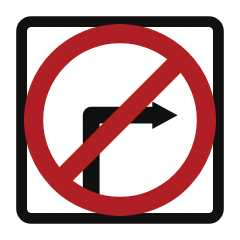
19. A driver stopped at a red signal wants to turn right and this sign is posted at the corner. What is permitted?
Show answer
Answer A: Nothing: the turn is barred whether the signal is red or green
The restriction works independently of the signal, so the usual permission to turn right after stopping at a red light does not exist where this sign is posted.
-
20. How does alcohol change the time a driver needs to respond to a hazard?
Show answer
Answer A: It slows it, so stopping takes longer
Alcohol is a depressant that lengthens the time between seeing a hazard and acting on it, which adds directly to the distance needed to stop.
-
21. What is the sensible way to handle a meal on a long drive?
Show answer
Answer D: Eat before you leave or stop to eat
Eating takes hands, eyes and attention, and the only version with no cost to your driving is the one that happens while the car is parked.
-
22. You are following closely behind a vehicle you intend to pass on a two-lane road. What should you do first?
Show answer
Answer D: Drop back to give yourself room to build speed before you pull out
From close behind you cannot see far enough ahead and you have no room to gather speed, so the pass takes longer and starts blind.
-
23. What should you do before you back out of your own driveway at home?
Show answer
Answer A: Walk around the vehicle and check behind it for children or objects
A small child, a bicycle or a toy can sit entirely inside the blind area behind a vehicle, and a walk-around is the only way to be sure it is clear.
-
24. You are turning left out of a driveway onto a busy two-way street. What must you do?
Show answer
Answer D: Wait for a gap in both directions before you start to move
The turn crosses one direction of traffic and joins the other, so you need a gap in both before leaving the driveway rather than stopping across a lane.
-
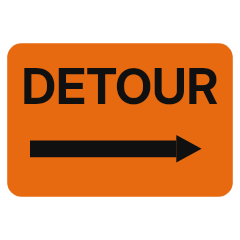
25. Which of these is true of the roadway a driver is being sent onto here?
Show answer
Answer D: Its own signs, signals and speed limits govern for the whole way around
The alternate route is an ordinary public road, so every control posted on it governs as usual; being sent that way grants no extra priority and no relief from the limits in force there.
-
26. A steady red arrow is displayed for your left-turn lane at a two-way intersection. What must you do?
Show answer
Answer C: Stop and remain stopped until an indication permits the turn
A steady red arrow prohibits the movement it points to, so the driver stops and waits for a green arrow, a flashing yellow arrow or another indication that permits the turn.
-
27. You are approaching a narrow bridge where the road has one lane in each direction and no shoulder. What should you do about passing?
Show answer
Answer B: Do not pass on or near the bridge
A narrow bridge gives neither vehicle anywhere to go, so passing is prohibited there in the same way as on a hill or in a tunnel.
-
28. The gates at a railroad crossing begin to come down as you approach. What must you do?
Show answer
Answer A: Stop and wait until the gates are fully raised and the lights stop flashing
Once the gates start down you must stop clear of the tracks and wait until they are fully raised and the warning lights have stopped.
-
29. How should a long trip be broken up to keep the driver alert?
Show answer
Answer D: Stop for a break every couple of hours and share out the driving
Regular breaks and a change of driver are the only reliable answers to fatigue; caffeine only postpones it.
-
30. How do you avoid the sharp nod at the end of a stop?
Show answer
Answer A: Ease the pedal pressure off slightly just before the vehicle stops
The nod comes from the suspension unloading at the instant the wheels stop. Releasing a little pressure at the end lets the vehicle settle smoothly.
-
31. A fire truck with lights and siren has just passed you and is heading down the same road. How closely may you follow it?
Show answer
Answer B: Well back, because following a responding emergency vehicle closely is illegal
Following a responding emergency vehicle closely is prohibited; the exact minimum distance is set by each state, so stay far enough back to keep the scene and other responders clear.
-
32. A yellow sign reading DEAD END is posted at the entrance to a street. What does it mean?
Show answer
Answer D: The street ends and there is no way through
A dead end street stops at its far end, so a driver who enters must come back out the same way.
-
33. What should you do about snow and ice on your vehicle before driving?
Show answer
Answer C: Clear all glass, mirrors and lights, and the roof and hood as well
Snow left on the roof or hood slides onto your windshield when you brake and blows into the path of drivers behind you, and covered lights make your vehicle hard to see.
-
34. Your road ends at a T-intersection with no signs or signals. Who has the right-of-way?
Show answer
Answer A: Traffic on the through road, and you must yield before entering
A driver on a road that ends at a T-intersection must yield to traffic on the through road that continues past the junction.
-
35. You are stopped at an intersection where bushes block your view of cross traffic. What should you do?
Show answer
Answer A: Edge forward slowly until you can see, then proceed when clear
Creeping forward a little at a time lets you gain a view without committing to the crossing. Never enter an intersection you cannot see into.
-
36. An orange sign showing the symbol of a person holding a flag or a sign paddle means that
Show answer
Answer D: a person is controlling traffic ahead and the driver must obey that person
The flagger sign warns that a trained flagger is directing traffic further on, and the flagger's instructions govern movement through the work zone.
-
37. In a work zone a flagger is directing traffic in a way that conflicts with the posted signs. Whom do you follow?
Show answer
Answer B: The flagger's directions
A flagger controls traffic through a work area that changes from day to day, and those instructions take precedence over the fixed signs and markings in that zone.
-
38. A child seat was in the car during a moderate crash. What should be done with it?
Show answer
Answer A: Replace it, because a seat that has been through a crash may be weakened
Crash forces can damage a seat in ways you cannot see, so a seat involved in anything but the mildest crash is replaced.
-
39. How should your following distance change in heavy rain?
Show answer
Answer D: It should be increased well beyond what you use on dry pavement
Wet pavement lengthens stopping distance and rain cuts visibility at the same time, so a larger gap gives you the extra seconds needed to see a problem and stop for it.
-
40. You are approaching a multilane roundabout. When should you choose your lane?
Show answer
Answer C: Before you enter, using the lane-choice sign on the approach
You select your lane on the approach the way you would at any multilane intersection, then stay in that lane all the way around, because changing lanes inside a roundabout creates side-impact conflicts.